What I Learned About Hair Toppers After Years in Hair Manufacturing
When I first entered the hair manufacturing industry, I believed wigs would always be the core solution for hair loss.
They were the most visible product.
The most discussed.
The most “complete” answer.
But years of working directly with salons, distributors, and end customers slowly changed my perspective.
One category kept growing quietly, consistently, and for very real reasons: hair toppers.
Hair Toppers Are Not a Trend They’re a Response to Real Needs
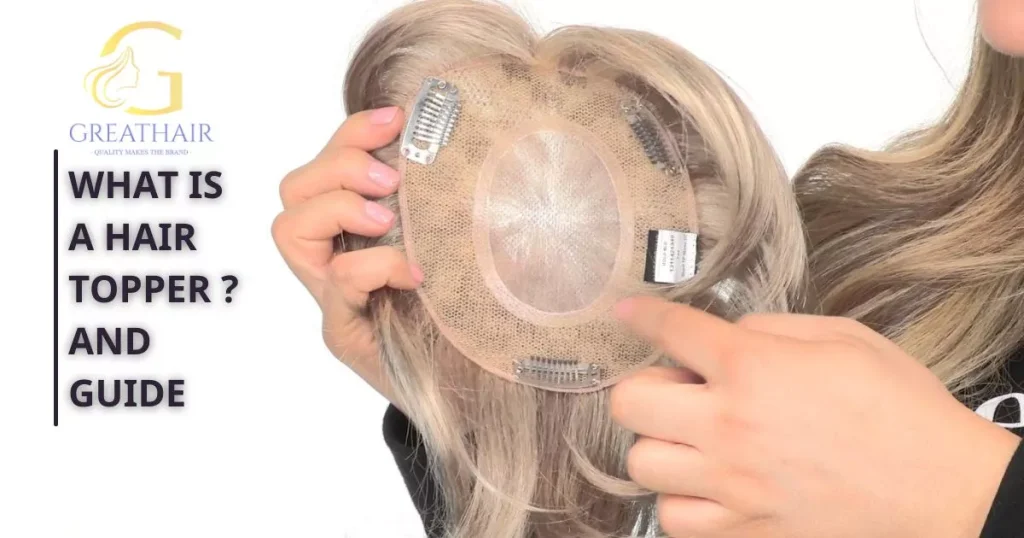
A hair topper is a partial hairpiece designed to cover thinning areas on the crown while blending with natural hair. From a technical standpoint, it’s a simpler product than a full wig.
From a human standpoint, it’s often a much better solution.
In manufacturing, we don’t just see orders we see patterns. And one pattern appears again and again:
Many women are not looking to “replace” their hair.
They are looking to support it.
Hair toppers meet people exactly where they are:
Early-stage hair thinning
Postpartum hair loss
Hormonal or stress-related shedding
The moment when hair loss is noticeable, but not total
This is the stage where wigs often feel “too much,” both physically and emotionally.
Why Hair Toppers Feel Different (Beyond the Technical Specs)
Technically, hair toppers work because they:
Add density only where it’s needed
Reduce tension on fragile hair roots
Don’t require glue or full-head coverage
Allow airflow and daily comfort
But after years in production, I’ve learned the real reason people stay with toppers is not technical.
It’s psychological.
A topper allows someone to keep their own hair visible.
Their hairline.
Their routine.
Their sense of normalcy.
That matters more than we often acknowledge in this industry.
A Manufacturer’s Insight: Durability Builds Trust, Not First Impressions
From the factory side, one lesson became very clear over time:
A hair topper doesn’t need to look perfect on day one.
It needs to last.
Customers remember how a product performs after 6 months, 12 months, even 18 months. A high-quality human hair topper that maintains texture, density, and manageability over time builds trust and trust creates long-term relationships.
This is why sourcing, cuticle alignment, and quality control matter far more than aggressive pricing or fast trends.
Hair Toppers vs Wigs: Not a Competition, but a Timeline
In reality, hair toppers and wigs are not competitors.
They serve different stages of the same journey.
Many customers start with wigs because they think it’s the “correct” solution. Later, once they understand their own needs better, they move toward toppers for everyday comfort and natural integration.
Understanding this transition is essential for salons, distributors, and brands that want to serve clients long-term rather than just make one sale.
Why I Wrote a Complete Guide on Hair Toppers
I realized that many misunderstandings around hair toppers come from a lack of clear, honest education especially from a manufacturing perspective.
So I wrote a detailed guide explaining:
What a hair topper really is
Who it’s best suited for
Hair topper vs wig comparisons
Base types, materials, and lifespan
Why toppers are becoming a core category, not a niche
You can read the full article here:
👉 https://greathair.com.vn/what-is-a-hair-topper/
Final Thoughts
The most meaningful products in this industry are often the quiet ones.
Not the loud launches.
Not the trend-driven items.
But the solutions people rely on every day without needing to explain themselves.
Hair toppers are one of those solutions.
And after years in manufacturing, I no longer see them as an alternative to wigs.
I see them as a reflection of how deeply personal hair really is.


Comments
Post a Comment